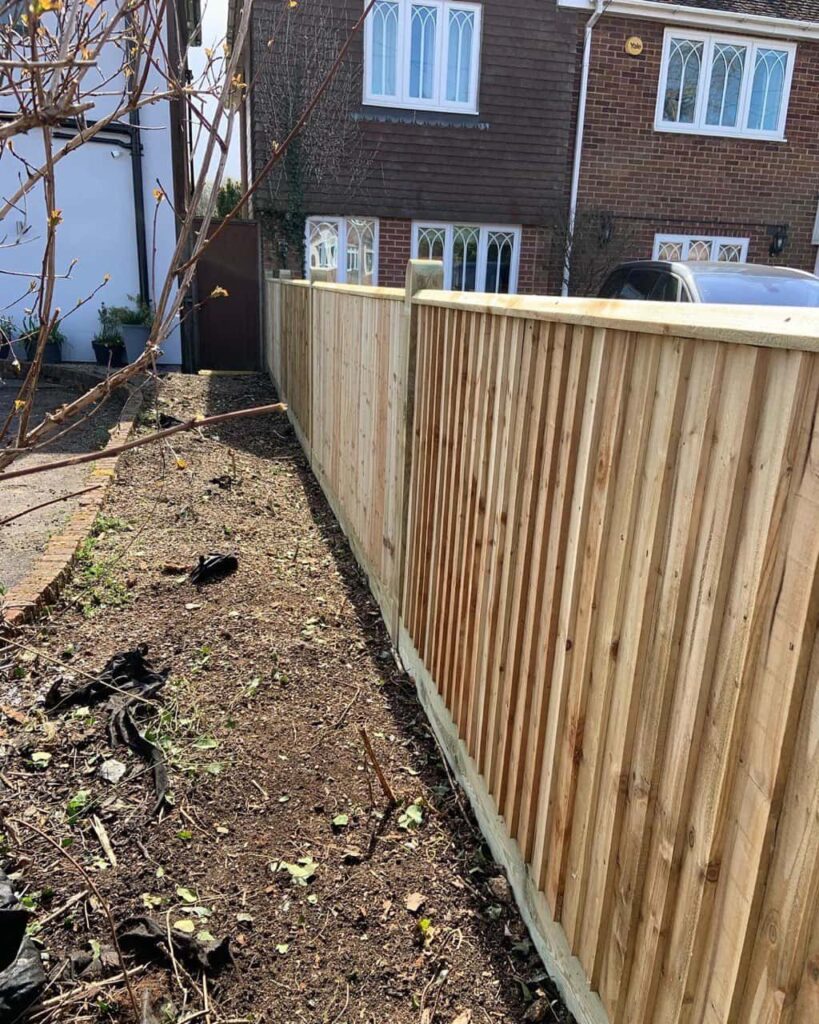
How Professional Fence Repairs Restore Strength and Stability
A damaged fence does not always need to be completely replaced. Leaning posts, loose panels, weakened fixings and damaged individual sections can often be addressed through carefully planned fence repairs, provided the remaining structure is in suitable condition. The important point is to identify where the weakness originates rather than simply improving the appearance of the most obvious damaged area.
For property owners in Tunbridge Wells, Kent, professional fence repairs can help restore the strength, alignment and practical performance of an existing boundary. By assessing the posts, panels, rails, fixings and surrounding ground, an experienced fencing contractor can determine which components need attention and whether sound sections can remain in place.
How Professional Fence Repairs Reinforce a Weakened Boundary
A fence functions as a connected structure. Panels or boards create the visible boundary, but their stability depends heavily on posts, rails, fixings and the way these components are supported.
This means that a loose panel may not necessarily be the main problem. The weakness could originate from a damaged post, deteriorated rail, failed fixing or movement at ground level.
Professional fence repair starts by establishing where stability has been lost. Once the underlying cause is understood, the affected components can be repaired or replaced as appropriate rather than carrying out superficial work that leaves the original weakness unresolved.
Why Fences Become Unstable Over Time
Outdoor fencing is continually exposed to changing conditions.
Wind places pressure on the fence surface, while repeated wetting and drying can gradually affect timber components. Ground movement can influence posts, and fixings can loosen as the structure experiences repeated movement.
Common signs of developing weakness include:
- Fence posts beginning to lean
- Panels moving noticeably in windy conditions
- Loose or detached boards
- Damaged rails
- Sections falling out of alignment
- Deterioration around the base of posts
- Loose fixings
- Gaps developing between connected components
These symptoms should be assessed as part of the complete fence because several may originate from the same underlying problem.
Strong Fence Posts Are Essential
Posts provide the primary support for most fencing systems.
If a post becomes unstable, the sections connected to it can begin moving even when the panels themselves remain in reasonable condition. This can create the impression that several parts of the fence are failing when the main weakness is concentrated around one supporting point.
A professional inspection can determine whether the post remains suitable, requires reinforcement or needs replacing.
Restoring dependable support at post level can often make a substantial difference to the stability of the surrounding fence.
Leaning Fences Need More Than Straightening
When a fence begins leaning, simply pushing it upright does not address why the movement occurred.
The supporting post may have deteriorated, the ground around it may no longer provide sufficient stability, or connections between different components may have weakened.
Without dealing with the cause, the fence can gradually return to the same position.
Professional repair aims to restore the support responsible for holding the fence upright. Once this has been achieved, affected panels and rails can be realigned and secured appropriately.
Damaged Posts Can Affect Several Fence Sections
One failed post can influence more than one panel.
Because adjoining fence sections commonly share the same supporting posts, movement at a single point can create instability on both sides. Continued movement can then place additional strain on rails, fixings and neighbouring components.
Addressing the damaged post early can therefore help prevent a localised problem from affecting a larger section of fencing.
This is one reason why apparently minor movement should not automatically be ignored simply because the fence is still standing.
Loose Panels May Indicate a Deeper Problem
A rattling or moving fence panel is an obvious sign that something requires attention, but the panel itself may still be perfectly serviceable.
Loose panels can result from failed fixings, movement in supporting posts or deterioration within the framework.
Replacing the panel without checking these areas could leave the actual cause untouched.
Professional fence repair establishes whether the panel is damaged or whether it simply needs to be secured correctly once the surrounding support has been restored.
Rails Play an Important Structural Role
Horizontal rails can be less noticeable than posts or panels, but they perform an important function within many types of timber fencing.
They connect and support the visible boards or sections of the fence. If a rail deteriorates or becomes detached, the fence can lose rigidity even when individual boards remain intact.
Repairing or replacing damaged rails can restore support across a broader section.
The surrounding timber should also be checked so that new components are not attached to areas that are already substantially weakened.
Fixings Can Be the Source of Movement
Not every unstable fence requires major structural work.
Sometimes the primary issue is found at the connection points between otherwise sound components. Fixings can loosen, corrode or fail, allowing panels, rails or boards to move independently.
Professional repair includes checking how different sections are connected.
Where the underlying timber and supports remain suitable, renewing or correcting failed connections can help restore rigidity without unnecessarily replacing larger sections.
Localised Timber Damage Does Not Always Mean Complete Replacement
Visible deterioration can understandably make homeowners wonder whether the entire fence has reached the end of its useful condition.
However, fencing does not necessarily deteriorate uniformly.
One post may have weakened while neighbouring posts remain sound. A particular rail may be damaged while the rest of the framework continues to perform correctly. Similarly, individual boards or panels may require attention without affecting the complete boundary.
Professional assessment allows these distinctions to be made.
Where damage is genuinely localised, targeted fence repairs can retain serviceable sections while concentrating work where it is actually required.
Wind Can Reveal Existing Weaknesses
Strong winds often make fencing problems more noticeable, but the weather may expose a weakness that was already developing rather than creating it entirely.
A slightly loose post or fixing can allow repeated movement. Each period of movement may then place additional pressure on adjoining parts of the fence.
After noticeable movement, checking the complete affected section is worthwhile.
The visible damage may be concentrated in one location, but nearby posts and connections can also require attention if they have been placed under additional strain.
Ground-Level Deterioration Can Be Easy to Miss
The most important weakness in a timber fence is not always immediately visible.
The lower section of a post can deteriorate while the timber above ground still appears reasonably sound. Because this is where the post relies on secure support, deterioration in this area can significantly affect stability.
A fence that suddenly begins leaning may therefore have a problem that has been developing gradually.
Professional inspection can help identify whether instability originates around the base rather than assuming that the visible upper section is responsible.
Correct Alignment Matters During Repairs
Restoring strength is only part of a successful fence repair.
Sections that have moved should also be brought back into appropriate alignment wherever possible. Poor alignment can affect appearance and may place unnecessary strain on connections between different components.
Posts need to provide appropriate support, while panels, rails or boards should be positioned consistently.
Taking the time to restore the structure properly helps produce a repair that looks intentional rather than simply patched together.
Repairs Should Work With the Existing Fence
Where substantial sections remain serviceable, new repair components should integrate appropriately with the existing structure.
This requires consideration of dimensions, construction method and how neighbouring sections are supported.
The objective is not simply to insert new material wherever damage is visible. The repaired area needs to function as part of the wider fence.
Careful integration can also help maintain a consistent appearance across the boundary rather than making every repair unnecessarily prominent.
Early Repairs Can Prevent Damage From Spreading
A small amount of movement can place additional stress on nearby fence components.
For example, an unstable post can allow attached panels to move repeatedly. That movement can loosen fixings, strain rails and eventually affect the next supporting post.
Repairing the initial weakness can interrupt this process.
Addressing localised deterioration while surrounding sections remain sound is generally more practical than allowing movement to continue until several connected components require attention.
When Is Fence Replacement More Appropriate?
Professional repair is valuable, but it is not automatically the correct approach for every damaged fence.
If deterioration is widespread across numerous posts, rails and panels, repeatedly repairing individual sections may not provide a satisfactory long-term result. Similarly, extensive structural weakness throughout the boundary can indicate that the problem is no longer localised.
The condition of the fence should determine the recommendation.
A professional fencing contractor can assess how much of the existing structure remains serviceable and whether targeted repair or more extensive renewal is the more appropriate approach.
Why Professional Assessment Matters
A damaged fence can appear relatively simple from a distance, but identifying the true cause of instability requires looking at how its components work together.
Professional assessment considers the posts, panels, rails, fixings, alignment and ground-level support rather than focusing only on the most obvious damaged component.
This helps answer several important questions:
- Where is the movement originating?
- Which components remain structurally sound?
- Has one failed section affected neighbouring areas?
- Can the existing materials be retained?
- What work is needed to restore proper support?
- Is the damage localised or more widespread?
Answering these questions before work begins allows the repair to address the actual weakness rather than simply disguising it.
Professional Fence Repairs in Tunbridge Wells, Kent
At Fast Fix Fencing Tunbridge Wells, we approach fence repairs by identifying why the structure has become loose, damaged or unstable before determining the work required.
Where suitable sections of fencing remain sound, targeted repairs can address damaged posts, panels, rails or connections while retaining the parts that continue to perform effectively. This provides a proportionate approach to restoring an existing boundary.
For property owners in Tunbridge Wells, Kent, professional fence repair can help bring weakened fencing back into proper alignment and restore the support required for dependable everyday performance.
Conclusion
Professional fence repairs restore strength and stability by dealing with the structural cause of the problem rather than concentrating solely on visible damage. An unstable panel may originate from a weakened post, while a leaning section could involve ground-level deterioration, failed fixings or damaged rails.
Careful assessment makes it possible to distinguish between components that genuinely require repair or replacement and those that can remain in service. Where the wider fence is still in suitable condition, targeted repairs can provide an effective way to restore the boundary without unnecessary replacement.
If your fencing in Tunbridge Wells, Kent has started leaning, moving or showing signs of localised damage, contact Fast Fix Fencing Tunbridge Wells. We can assess the affected sections and recommend the appropriate fence repairs to restore strength, stability and a well-maintained finish.
Call us on: 01892 362 993
Click here to find out more about Fast Fix Fencing Tunbridge Wells
Click here to complete our contact form and see how we can help with your fencing needs.