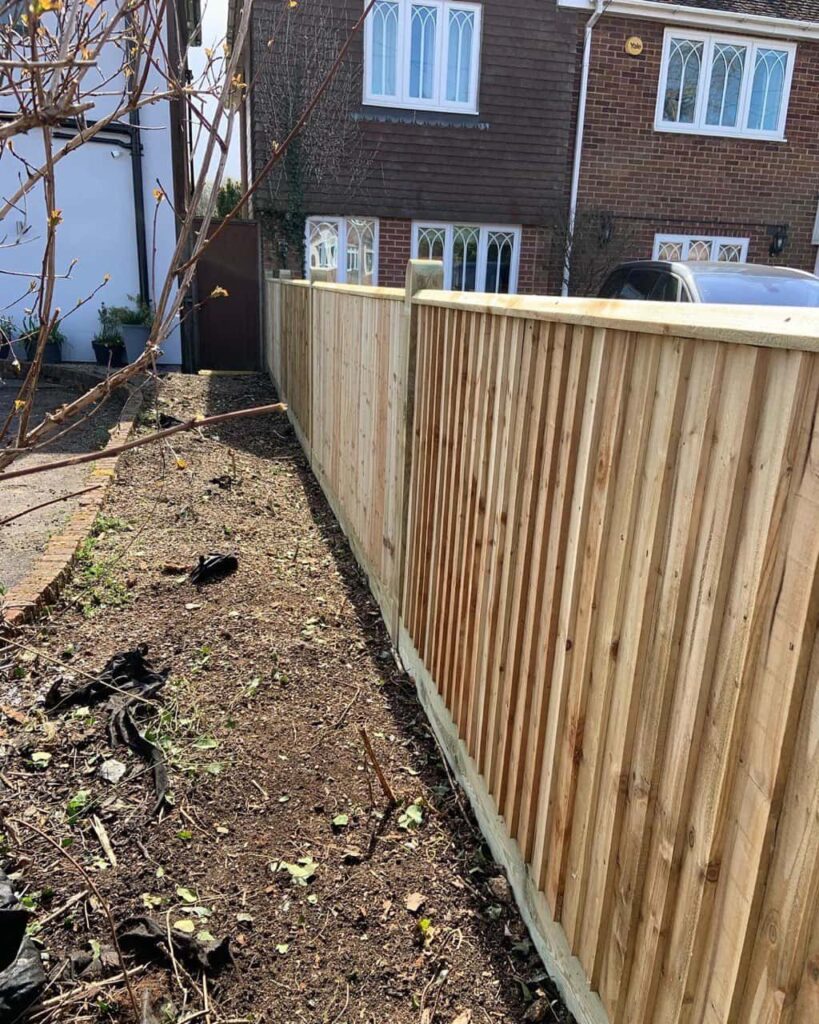
Can Repairs Help a Fence That No Longer Provides Enough Privacy?
A garden fence often serves several purposes at once. As well as defining the boundary and contributing to the appearance of an outdoor space, it can provide valuable privacy for patios, lawns and other frequently used parts of the garden. When a fence begins to deteriorate, that sense of privacy can gradually be lost.
Gaps may appear between panels, boards can become loose, posts may start leaning, or individual sections can become damaged. The good news is that a loss of privacy does not always mean the entire fence needs replacing. Where the main structure remains sound, professional fencing repairs can often restore damaged sections and help the boundary feel private and well maintained again.
For homeowners in Tunbridge Wells, Kent, Fast Fix Fencing Tunbridge Wells can assess the condition of an existing fence and determine whether targeted repairs can restore the privacy and stability required.
Why Do Fences Lose Privacy Over Time?
Fencing is continually exposed to outdoor conditions. Wind, rain, changing temperatures and general ageing can gradually affect individual components.
Privacy can be reduced by:
- Broken fence panels
- Loose or missing boards
- Leaning posts
- Widening gaps
- Sections moving out of alignment
- Damaged trellis or upper sections
- Deterioration close to ground level
- Previous repairs beginning to weaken
Sometimes the problem is concentrated in one small area. In other cases, several sections may have deteriorated together.
Understanding the cause is important before deciding whether repair or more extensive fencing work is appropriate.
Damaged Fence Panels Can Often Be Repaired or Replaced
One defective panel does not necessarily mean replacing everything
A fence can remain structurally sound overall while one or two panels become damaged.
A panel may have been affected by strong winds, accidental impact or gradual deterioration. If the posts and surrounding sections remain secure, dealing specifically with the affected panel may be enough to restore the boundary.
Replacing a damaged panel can immediately close an unwanted opening and restore a more consistent appearance.
The important consideration is whether the supporting structure is still capable of holding the repaired or replacement section securely.
Loose Boards Can Create Unwanted Gaps
Individual timber boards can loosen or become damaged while the rest of the fence remains serviceable.
Even relatively narrow gaps can reduce privacy, particularly where the fence borders a seating area or another frequently used part of the garden.
Where appropriate, individual boards may be secured or replaced rather than rebuilding the complete fence.
This is one of the advantages of addressing deterioration early. Localised problems can often remain localised when the surrounding fencing is still in good condition.
Leaning Fence Posts Can Affect Privacy
A privacy problem may actually be a structural problem
When a fence begins leaning, gaps can develop even if the panels themselves are not badly damaged.
Fence posts provide essential support for the complete boundary. If a post becomes unstable, adjoining panels can move away from their intended positions.
This can lead to:
- Uneven gaps
- Misaligned panels
- Reduced fence height in certain areas
- Increased movement during windy weather
Simply closing the visible gap without addressing the unstable post may not provide a lasting solution.
Professional assessment can determine whether the post can be repaired or whether the affected support requires replacement.
Repairs Can Restore the Original Fence Line
A fence that has moved gradually over time may no longer form the straight, consistent boundary it once did.
Individual sections can lean in different directions, leaving the top uneven and creating gaps between panels.
Where the underlying components remain suitable, repairs can help bring sections back into alignment.
Restoring the fence line can improve both privacy and appearance, particularly when the boundary is clearly visible from the house or main garden areas.
What If There Are Gaps Between Several Panels?
Several gaps can indicate that more than one component has moved.
Before filling or covering them, it is important to understand why they appeared.
Possible causes can include:
- Post movement
- Loose fixings
- Panel deterioration
- General structural movement
- Weather-related damage
If the underlying cause is corrected, the panels can often be repositioned or repaired appropriately.
Simply attaching additional material over unstable fencing may disguise the problem temporarily without restoring the strength of the boundary.
Fence Height Can Affect How Private the Garden Feels
Privacy is about more than closing gaps
Sometimes a fence is in reasonable condition but no longer provides the level of screening the homeowner wants.
This can happen when the way the garden is used changes. A new seating area, patio or frequently used section of the garden may make previously acceptable fencing feel more exposed.
Depending on the existing fence design and condition, alterations to appropriate sections may improve screening while retaining much of the current boundary.
The suitability of any modification depends on the strength and construction of the existing fencing, which is why professional assessment is worthwhile.
Can the Top of an Existing Fence Be Improved?
In some situations, the upper section of the boundary is where additional screening would make the greatest difference.
If the supporting fence remains sound, suitable modifications may sometimes provide greater visual separation without replacing every component.
However, adding material to an existing fence changes the demands placed on its posts and supports, particularly during windy conditions.
Any alteration should therefore consider structural stability rather than focusing solely on increasing screening.
Wind Damage Can Quickly Reduce Privacy
Strong winds can expose weaknesses in fencing very quickly.
A previously secure boundary may develop:
- Loose panels
- Damaged boards
- Movement around posts
- Open gaps
- Leaning sections
These problems are particularly noticeable when the fence is relied upon for privacy.
Prompt repair can help prevent movement from affecting neighbouring sections. A loose panel left repeatedly moving in the wind can place additional strain on its fixings and supporting posts.
Early Repairs Can Preserve More of the Existing Fence
One of the strongest reasons for addressing privacy problems promptly is the opportunity to retain sound fencing materials.
For example, a loose board may initially require relatively localised attention. If it remains exposed and allows surrounding components to move, deterioration can spread.
Similarly, one unstable post can eventually affect the panels attached to either side.
Early repairs can help:
- Stabilise vulnerable sections
- Close unwanted gaps
- Preserve sound panels
- Protect neighbouring components
- Maintain the existing boundary
- Restore a consistent appearance
This makes regular attention valuable even when the fence has not suffered major damage.
When Are Fence Repairs a Sensible Option?
Repairs can be highly effective where the majority of the fence remains in serviceable condition.
They may be suitable when:
- Only a small number of panels are damaged
- Individual boards require attention
- One or two posts have become unstable
- Localised gaps have developed
- Particular sections have suffered weather damage
- The wider fence remains structurally sound
Under these circumstances, targeted repairs can restore privacy without unnecessarily disturbing sections that continue to perform correctly.
When Might More Extensive Fencing Work Be Better?
Repairs cannot correct widespread deterioration indefinitely
There comes a point where repairing individual sections may no longer address the overall condition of the fence.
More extensive work may need considering where:
- Numerous posts have become unstable
- Many panels are deteriorating
- Timber is extensively weakened
- Large sections are leaning
- Repairs are becoming increasingly frequent
- The fence no longer provides consistent screening across the boundary
The decision should be based on condition rather than simply the age of the fence.
A professional inspection can establish how much of the existing structure remains worth retaining.
Privacy Repairs Should Also Consider Fence Strength
A fence can look private while still being structurally weak.
For example, attaching material to cover gaps may improve screening temporarily, but it does little to help if the posts underneath are unstable.
Good fencing repair should therefore consider two questions:
Does the fence provide the required privacy?
And is it structurally secure enough to continue doing so?
Addressing both creates a more dependable result than concentrating solely on appearance.
A Well-Maintained Fence Improves the Whole Garden
Restoring privacy can have a noticeable effect on how comfortable an outdoor space feels.
A secure, consistent boundary can make:
- Patios feel more enclosed
- Seating areas more comfortable
- Lawns feel better defined
- Garden boundaries appear tidier
- Outdoor areas feel more usable
The fence does not need to dominate the garden to achieve this. A well-maintained boundary should complement the outdoor space while providing practical screening where it is needed.
Why Professional Fence Assessment Is Worthwhile
It is not always easy to determine whether a privacy problem is caused by the panels, posts, fixings or a combination of components.
A professional fencing assessment can consider:
- Overall fence stability
- Post condition
- Panel condition
- Individual damaged boards
- Existing gaps
- Alignment
- Areas affected by weather
- Whether repairs are likely to provide a lasting result
This helps ensure that the work addresses the reason privacy has been lost rather than simply hiding the most obvious symptom.
Professional Fence Repairs in Tunbridge Wells
At Fast Fix Fencing Tunbridge Wells, we provide professional fencing services for properties throughout Tunbridge Wells, Kent.
If an existing fence has become damaged, uneven or less private than it once was, we can assess whether repair is an appropriate solution. Where the surrounding structure remains sound, targeted work can help restore individual sections while retaining serviceable fencing.
Where deterioration has become more widespread, assessing the complete boundary allows the most appropriate solution to be identified.
Conclusion
Fence repairs can often restore privacy when the problem is caused by localised damage, loose boards, unstable posts, damaged panels or sections that have moved out of alignment. Where the wider fence remains structurally sound, repairing the affected areas can help restore a secure and consistent boundary without replacing sections that are still performing properly.
The key is identifying why privacy has been lost. Covering gaps alone may not provide a lasting result if movement or structural deterioration is responsible. Professional assessment ensures that both screening and stability are considered.
If your fence in Tunbridge Wells, Kent no longer provides the privacy you want, contact Fast Fix Fencing Tunbridge Wells. Our experienced team can assess the existing boundary and recommend suitable repairs to help restore its appearance, stability and practical screening.
Call us on: 01892 362 993
Click here to find out more about Fast Fix Fencing Tunbridge Wells
Click here to complete our contact form and see how we can help with your fencing needs.